BLOG
Pergola, Pavilion or Gazebo: Which Is Best for Your Backyard?
Pergola, Pavilion or Gazebo: Which Is Best for Your Backyard?
Adding a structure beside an inground pool can completely change how the backyard is enjoyed. Pergolas, pavilions, and gazebos can all create more comfortable outdoor spaces, but they differ in coverage, appearance, layout, and how they function within a pool landscape. Understanding those differences can help homeowners choose a structure that complements both their pool and the way they plan to use their backyard.
1. Start With How Much Coverage You Want
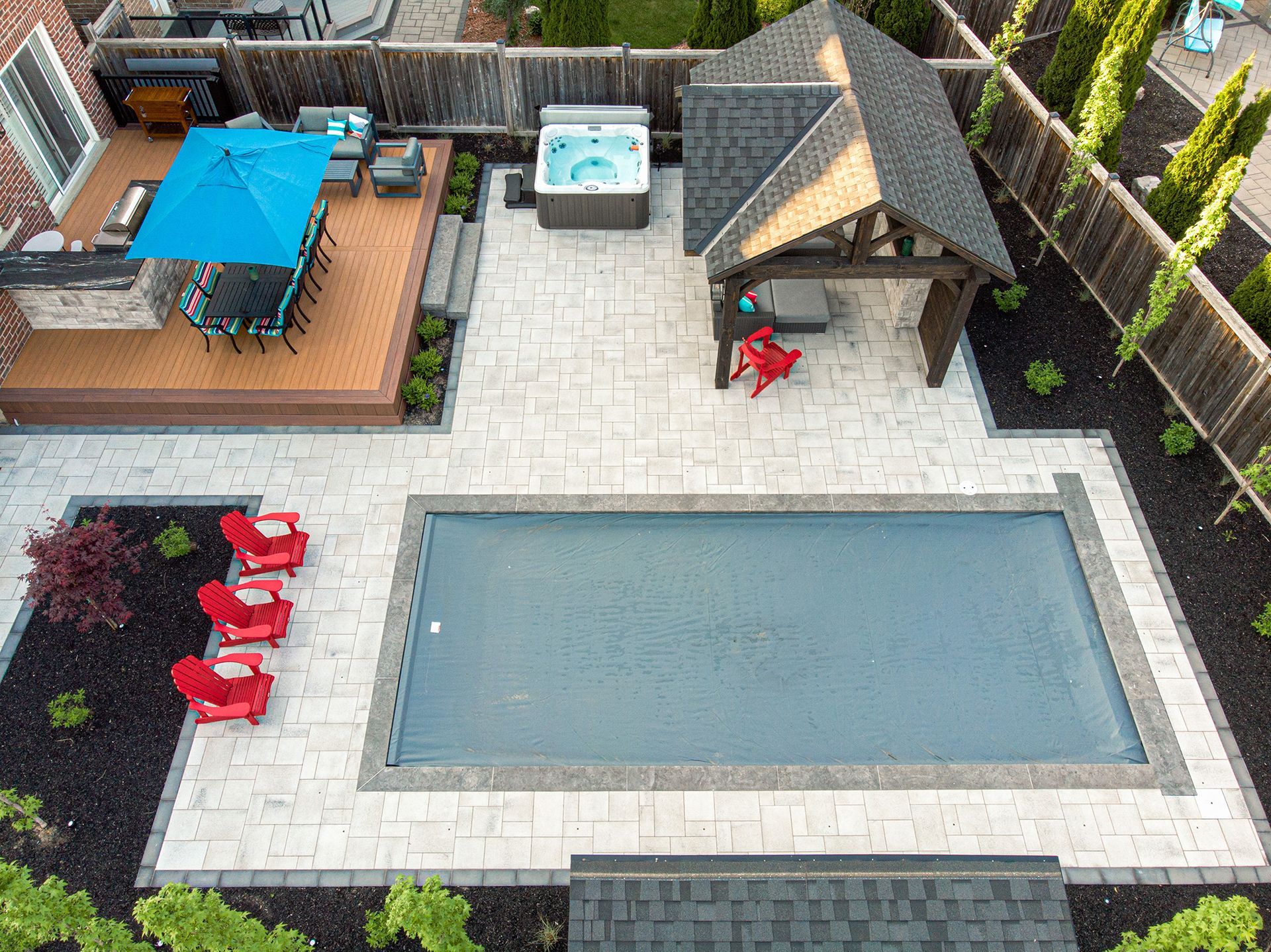
One of the clearest differences between these three structures is the amount of overhead coverage they provide. A traditional pergola has an open or slatted roof, allowing sunlight and airflow to pass through while creating partial shade. Pavilions have solid roofs, making them a stronger choice when the goal is to create a covered poolside lounge or dining area with protection from direct sun and rain. Gazebos also typically have solid roofs, providing a sheltered space that can be enjoyed during a wider range of summer conditions. Deciding whether you want filtered sunlight or more complete overhead shelter can quickly narrow down which structure makes the most sense for your backyard.
2. Consider How the Structure Will Be Used Beside the Pool
Think beyond appearance and decide what you actually want to do underneath the structure. A pergola can work well over casual seating or a section of patio where partial shade is the priority, while a pavilion can accommodate larger outdoor living arrangements beneath its open-sided roof. Gazebos tend to create a more defined standalone destination, making them suitable for a dedicated seating or relaxation area away from the main pool activity. Consider how many people will regularly use the space and what furniture or features you want underneath it before choosing its size and style. Matching the structure to its intended purpose helps ensure it becomes a useful part of the backyard rather than simply a decorative feature.
3. Think About the Shape of Your Pool Landscape
The amount and configuration of available space can influence which structure fits naturally into the backyard. Pergolas can be freestanding or attached to another structure, which gives homeowners flexibility when working around an existing patio or house. Pavilions are commonly designed as larger rectangular or square structures, making them well suited to spacious entertaining areas beside a pool. Traditional gazebos are often freestanding and may use round, octagonal, or other polygonal shapes, creating a distinct destination within the landscape. Looking at the pool, patio, house, property boundaries, and circulation routes together can help determine which structure fits the overall layout best.
4. Decide Whether You Want the Structure to Blend In or Stand Out
Each option can create a different visual effect within a pool backyard. A pergola has a lighter, more open appearance because of its posts and slatted overhead design, allowing it to define an area without creating the visual weight of a full roof. A pavilion can make a stronger architectural statement and can visually anchor a larger poolside entertaining area. A gazebo often becomes a distinct focal point because of its freestanding form and recognizable roof shape. Choosing a structure that complements the architecture of the home, pool design, and surrounding hardscaping can help the entire backyard feel intentionally connected.
5. Plan the Structure as Part of the Complete Pool Transformation
The best time to think about a pergola, pavilion, or gazebo is during the overall planning of the backyard rather than treating it as an afterthought. Its footprint can influence patio dimensions, furniture placement, pathways, landscaping, and how people move between the house and pool. Planning these elements together also gives homeowners an opportunity to position the structure where it contributes most to the finished backyard experience. A complete design can account for the relationship between the pool, covered or shaded areas, hardscaping, gardens, and entertainment spaces before construction begins. This approach can create a backyard where every major feature feels like it belongs within the same design.
So, Which One Is Right for Your Pool Backyard?
There is no single structure that works best for every property. Choose a pergola if you want an airy structure with filtered sunlight, consider a pavilion if substantial overhead coverage and a larger entertaining area are priorities, or explore a gazebo if you want a sheltered standalone destination within the landscape. The right choice ultimately depends on your available space, intended use, desired coverage, and the overall look you want to create around your pool.
Ready to create a pool backyard built for swimming, relaxing, and entertaining? Get a quote from
Scenic View Pools today and start planning your complete outdoor transformation.
Related Articles